

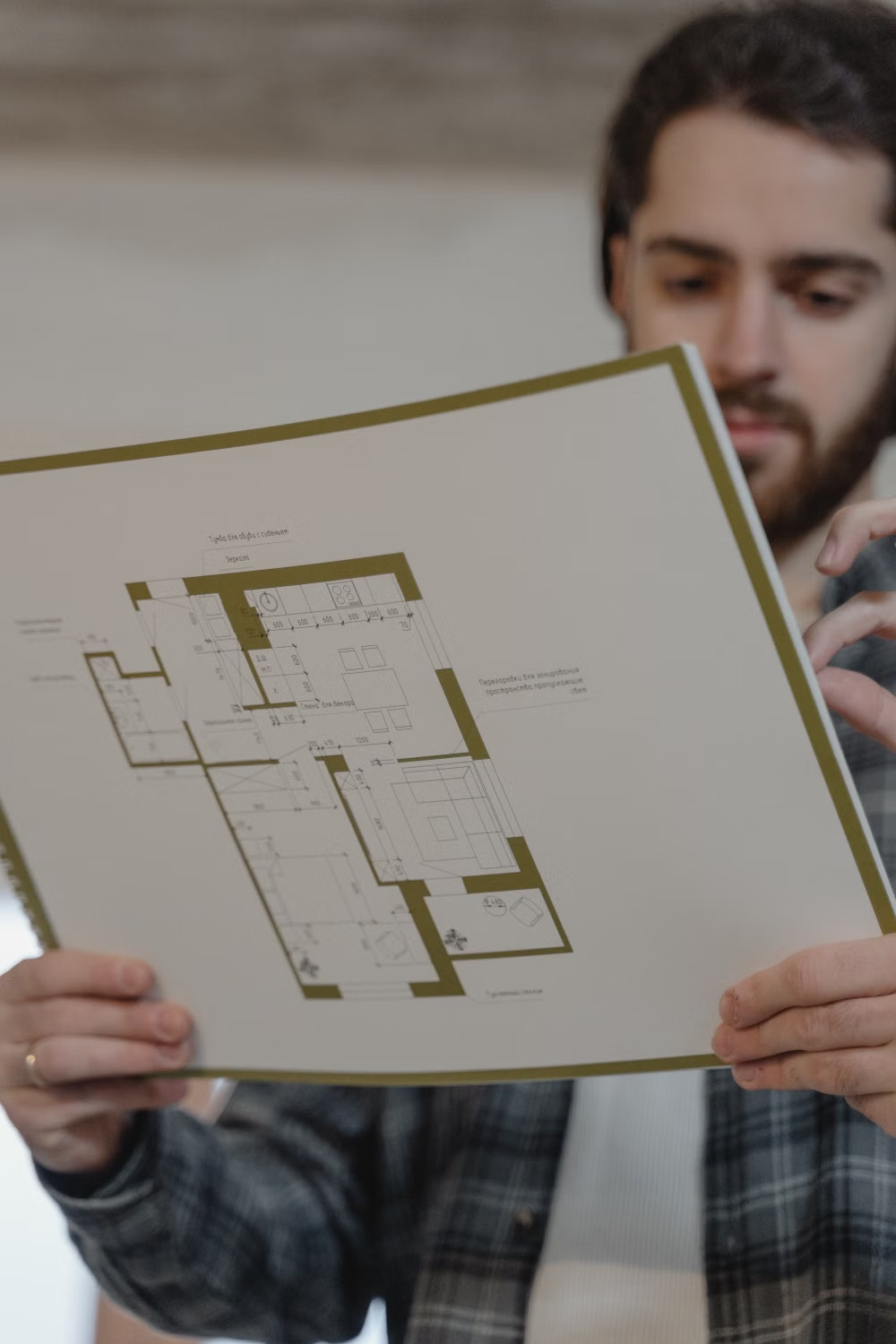
Buying from another country changes how you collect evidence. You cannot casually return to a street, compare the afternoon light, or ask the building manager a question on your way home. A polished video therefore needs to become the beginning of an investigation rather than its conclusion. The practical objective is to build a reliable picture of one specific property, its surroundings, its documentation, and the people handling the transaction. This guide explains a remote viewing workflow for buyers considering a home in Turkey. It does not determine legal eligibility or replace an independent property inspection. Those questions need appropriately qualified local professionals and current official information.
Start with a written buying brief
Before requesting videos, write down what the home must do. Include the number of permanent residents, home working needs, expected visits, mobility requirements, and whether the property will be occupied throughout the year. Separate essentials from preferences. A lift that accommodates a wheelchair may be essential; a decorative lobby may simply be attractive. Give the agent a clear search boundary and explain what would make you reject a property. The brief should also identify your intended decision date, who can attend in person, and which professional advisers will review documents. This prevents a fast sales conversation from deciding the process for you.
Give every shortlisted property a stable identity
Create one folder per property and assign a simple reference number. Record the advertised address, building name, apartment identifier, floor, asking terms, contact details, and the date each item was received. Ask your adviser to reconcile the physical apartment with the relevant official property information. A listing address, a map pin, and a photograph of a front door are different kinds of evidence. Do not assume they establish the same fact. The Turkish land registry authority provides an information route for foreign purchasers; use it to frame questions for your representative. Store identity documents securely and share them only through an agreed channel with the people who need them.
Separate representation from independent checking
A helpful selling agent can coordinate access and explain a property, but the buyer also needs a clear account of who is acting for whom. Ask who pays each participant, what service has been commissioned, and whether referrals produce a fee. Engage legal and technical advisers under their own written instructions. Specify the exact property and the questions they are expected to answer. A lawyer reviewing ownership issues is not automatically inspecting waterproofing. A surveyor describing visible defects is not automatically confirming your immigration position. When responsibilities are written down, gaps become easier to notice before the buyer commits.
Request an uninterrupted live tour
Arrange a live video appointment with enough time to pause and ask questions. Ask the presenter to start outside the building, show the entrance, and walk continuously to the apartment. Then follow a planned route through every room, balcony, service space, and accessible common area. Request both wide views and close details. Wide views reveal relationships between rooms; close views can show seals, stains, fittings, and damage. Ask permission before recording the call, and avoid capturing neighbours or private documents. A live tour can reduce uncertainty about what is being shown, but it cannot establish ownership, structural safety, or the condition of hidden installations.
Make the camera answer practical questions
Prepare a viewing script rather than relying on the presenter to select highlights. Ask for the view from a seated position, the space behind doors, the depth of wardrobes, the location of radiators, and the route from the kitchen to a dining table. Request normal camera settings instead of an exaggerated wide-angle lens when assessing proportions. Have the presenter place a tape measure against important openings and show both ends clearly. Measurements taken over a call remain provisional; obtain a measured plan if layout accuracy affects the purchase. A large room can still have awkward circulation, particularly when doors, columns, and fixed kitchen units compete for usable space.
Inspect the building beyond the apartment
A remote buyer may receive excellent interior footage and almost no evidence about the building. Ask to see the lift lobby, stairs, entrance lighting, refuse arrangements, parking route, and accessible service areas. If storage or parking is part of the proposal, identify the actual space and ask your adviser to check how its use is documented. Speak with the management team about operating hours, recurring charges, maintenance arrangements, and planned works. Request current written information rather than a casual estimate. Do not ask an agent to enter unsafe plant rooms or restricted areas; qualified personnel should examine technical systems and explain their findings.
Test the location as a daily routine
A map distance does not describe a complete journey. Identify several real trips: groceries, a school or workplace, public transport, healthcare, and an evening return home. Ask someone independent to walk or drive the important routes and report gradients, crossings, pavement conditions, lighting, and places where access becomes difficult. Check transport information with the relevant operator because routes and timetables can change. For a coastal or seasonal location, ask what remains open outside the holiday period. For an urban apartment, investigate the street at different times. A quiet midday recording cannot tell you what an entertainment street sounds like late at night.
Build a document question register
Keep a separate table listing each document or question, the person responsible, the expected response, the date received, and any unresolved issue. Examples include official property identification, permitted use, the basis of advertised floor area, building management information, and the treatment of promised fixtures. Ask your local legal adviser which records apply to the particular transaction and how their authenticity should be checked. Avoid treating a seller's screenshot as equivalent to an independently checked record. The purpose of the register is to make uncertainty visible. A blank field should remain blank until the responsible adviser supplies an answer; it should not quietly become an assumption.
Handle payments through a verified process
Before any payment, obtain written instructions from the professional handling the relevant stage and independently confirm the recipient through a trusted contact route. Unexpected changes of account details deserve a fresh verification. Do not use contact information supplied only inside the message announcing the change. Keep a record of what the payment represents, which property it concerns, the amount and currency, and the conditions your adviser says apply. This is process guidance, not a statement that any particular payment arrangement is suitable. Official guidance distinguishes a commitment to transfer property from the actual registration of ownership. Ask your lawyer to explain exactly where your transaction stands.
Commission a physical inspection with a clear scope
Even a detailed virtual tour cannot reproduce a competent visit. Ask an independent professional what inspection is appropriate for the age, construction, setting, and condition of the home. Agree which areas will be accessible, whether services will be operating, what testing is included, and what the report will exclude. Require photographs linked to locations and a distinction between observed defects, suspected problems, and matters needing specialist investigation. If access is restricted, record that limitation rather than accepting a clean bill of health. Arrange follow-up questions while the inspector's findings are fresh, and ask which unresolved issues could affect your intended use of the property.
Compare evidence instead of presentation quality
Use the same comparison sheet for every shortlisted home. Give separate entries to layout, location, running costs, physical condition, documentation, and remaining unknowns. Do not convert everything into a single attractive score too early. One serious unanswered question can matter more than several appealing features. As a hypothetical example, two apartments may have similar interiors, but one has a documented parking arrangement and a recent maintenance record while the other has verbal promises only. That difference does not prove the second home is unsuitable; it means the buyer lacks equivalent evidence. Request the missing information before drawing a conclusion.
Plan the final visit and the handover
Whenever possible, reserve an in-person visit before the point at which your adviser says commitments become difficult to change. If you cannot attend, appoint a representative with an explicitly agreed role and instructions reviewed by your legal adviser. Make a final checklist covering the exact apartment, included fixtures, keys, access devices, meter details, manuals, outstanding defects, and the contact responsible for each follow-up. Do not confuse taking possession with confirming that every administrative and technical matter is settled. Keep the decision record and supporting files after completion, because future maintenance, insurance discussions, and a later sale may require information collected during the purchase.
A practical remote viewing appointment
Send the agenda ahead of the call: exterior approach, continuous access route, measured room tour, windows and outlook, wet areas, storage, common facilities, and unanswered questions. Allocate a separate conversation for documents so that legal discussion does not consume all the viewing time. At the end, repeat the questions that remain unresolved and agree who will answer them. Summarise the appointment in writing while the details are clear. If the connection fails or a room is unavailable, schedule another visit. Buying remotely works best when the buyer can say what has been checked, by whom, and with what limitations, rather than simply saying that the video looked convincing.
Sources and further reading
Cover photo: Pexels. Illustrative image; not a property listing or an endorsement. Pexels · Pexels License

Residence TR Editorial
Residence TR bünyesinde mimarlık tarihi, Boğaziçi yalıları, kentsel dönüşüm ve yabancı yatırımcılara yönelik mevzuat analizleri üzerine özel araştırmalar yürütmektedir.
Türkiye'de Gayrimenkul Yatırımı mı Planlıyorsunuz?
Uzman kadromuzla bütçenize, yatırım hedeflerinize ve vatandaşlık uygunluğuna en doğru konut projelerini belirleyin.